Showing posts with label 3 stars. Show all posts

Monday, December 9, 2013

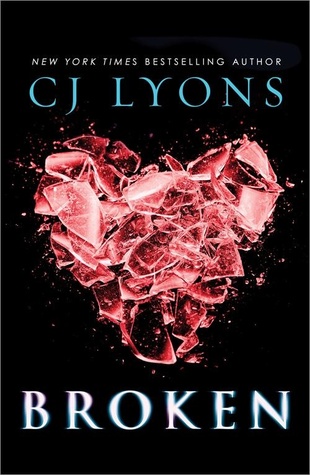
Review: Broken by C.J. Lyons

This is a quick, suspenseful little read. I won an arc from Tiffany at About to Read (thanks Tiffany!) and it landed on my doorstep just as NaNoWriMo was kicking off. I sat on it for awhile, and then dove in one night when my fingers were bleeding from trying to force out the NaNo wurdz.

If it feels like I'm spending more time reviewing how I got the book and went about reading it than the book itself, that's true, and it's probably because I don't have a whole lot to say, unfortunately. The book wasn't awful or anything; it was just kind of meh. It's kind of a horror/suspense/mystery type novel, and I figured out very early on how it would end. This isn't because I'm some genius at unraveling mystery novels (in fact I'm usually pretty dense about such things)--rather, I'm pretty sure this exact scenario played out on an episode of House years ago.

15-yr old Scarlet Killian has had a rough life, to say the least. In an out of hospitals with a rare heart condition for as long as she can remember, she convinces her parents to let her go to high school for one week during her sophomore year. Though they're terrified she'll keel over and die at any moment, they begrudgingly agree to let her live like a regular teenager for the one week.

The pacing of the novel is well done, with each chapter consisting of one day of Scarlet's life at high school. Slowly, the author reveals certain clues about Scarlet's life, like the weird dreams she has about a baby boy being smothered by clowns, the fact that she has zero memory of massive periods in her life, and the way her step mother (the school nurse) seems just a little too involved in the personal lives of many students at the high school.

I don't know. Like I said, it's a very suspenseful novel and it's one that you will want to read cover to cover in one sitting. But, at the end of the day, I guess I just didn't feel it was terribly original. I won't give away what happens other than to say that "what happens" has already happened in at least one episode of a very popular TV show, and I'm pretty sure there is a Lifetime movie (or five) with this exact plot as well. It's predictable and I'm not sure C.J. Lyons adds anything too exciting or unique to the tale, unfortunately. I realize that plenty of "plots" have been done again and again, but I think it's easier to forgive this type of thing when it happens in a romance novel. If it's a mystery novel and you've got the same exact set up and conclusion as other popular works out there, that's a problem. Maybe if there had been some unique twists or if Scarlet's voice had been particularly interesting or unusual in some way, it would have worked, but that didn't seem to be the case.

Still, it's clear that C.J. Lyons is an experienced storyteller. The writing was very good and the pacing was excellent, keeping me engaged from the first page to the last.

3 stars.

Saturday, June 22, 2013

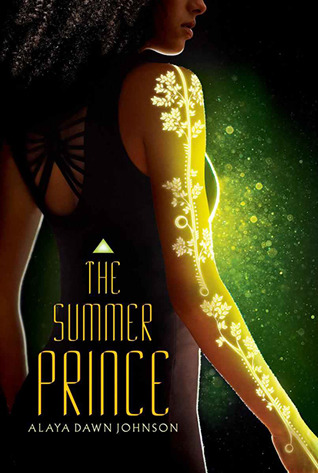
Review: Alayna Dawn Johnson, The Summer Prince


Yet another YA dystopian fiction. I can't keep my hands off this stuff, even though I'm getting more and more grumpy with each one I read because they are all so similar and predictable. But something about the idea of a world not so unlike ours, gone terribly wrong, keeps the doldrums at bay and continues to draw me in (against my better judgment). 

Anyways. This book was typical in many ways: it features a feisty female protagonist with Special Talents (she's an artist) who has a forbidden romance with a boy who is doomed to die; the world has recently been blown to bits after a series of (presumably) nuclear incidents and the new civilization that has emerged from the dust seems idyllic from the outside but is actually deeply whacked and oppressive (shocker).

A brief plot summary before I get into what's different about this one and why, despite the unique take on this genre, this was still ultimately a dud for me. This takes place in what used to be Brazil, I believe, in this giant city that exists in some type of pyramid structure, with the wealthiest/most powerful living on tier 10 at the top, and the lowly poor folks all the way at the bottom (there is a catchy word for the bottom tier that I cannot recall presently). (If you need a visual, I envisioned it looking like the White City of Gondor. Could be way off though.) 

The city is ruled by women. I guess they decided after the nuclear holocaust that men had done a pretty good job ruining everything for...pretty much all of civilization heretofore, so, no more men in charge. Every summer the city votes to elect a "summer king" who rules alongside the queen, and then at the end of the summer, the queen slits his throat in a grand ceremony that all the city attends. As the dying king takes his last breath, blood splurting everywhere, he has to select the new queen. So the king has the power to choose the next leader, but, tragically, it will be the last thing he ever does. 

Now that I have set it up for you, those of you who read these books can probably figure out the rest of the plot. This might come as a shock, but our girl June (the protagonist), falls hard for Enki, the summer king. They bond over their mutual love of art. Very tough situation for all involved since Enki has a death sentence. 

One thing that was weird/unique about this book is that every character in it is bisexual, yet the topic sexuality is never overtly addressed--not once in the entire book. It's just a given. When June's father dies, her mother marries a woman. Enki has affairs with both men and women throughout. And so does pretty much every other character we hear about. I thought it was kind of jarring that the topic of sexuality was never actually directly addressed in the book, because the author DOES address literally every other major difference between the old world and the new. June pontificates endlessly about race (white people are pretty much gone now that North America is a wasteland), gender (women are now the gender in power and everyone accepts it since men are blamed for ruining the old world), religion, politics, etc., but never touches on the fact that suddenly everyone and their brother is bisexual now. It was clearly an intentional move on the author's part and I felt vaguely manipulated by it, which was off-putting.

The main problem I had with the book was that it seemed sloppily put together. I could tell the author had done her homework with the world building, but the execution was a mess. Very confusing, lots of strange terms being thrown out with no context, not enough description for me to really visualize what the city or world looked like (which is why I had to substitute Gondor), etc. It sort of read to me like an early draft, so that was a bummer. Another problem, which pops up in 99.9% of these books, is that I didn't feel our girl June had any sort of distinct voice, and neither did her loverboy Enki. All the characters had one or two key "traits" (June is a feisty artist; Enki "loves" his city), but no one seemed at all developed, and when you combine the lack of character development with the confusing world building, it was just kind of a mess, and a rather boring one at that. I almost gave up on this a few times, but it's a pretty short book so I eventually manned up and powered through.

All in all, I will give this 3 stars I guess. That may seem generous, and it is. This gets points for originality (I liked that women were in power and the eerie ritual of the summer king was a nice gory touch).


Wednesday, February 22, 2012

Review: Rae Carson, The Girl of Fire and Thorns

This is the second book I've read in the last week that was published in fall 2011 and is about a 17ish year old girl in a richly imagined fantasy alter-universe with the title "PERSON of NOUN and NOUN." (The other book was Daughter of Smoke and Bones. Hopefully I will get around to reviewing it one of these days. It wasn't bad.)

This is the story of Elisa--a deeply insecure, overweight princess, who happens to be the bearer of a thing called the "godstone" which is a giant jewel type thing somehow attached to her bellybutton. Godstone bearers come around once in 100 years and they are expected to perform some heroic act of service for their people. No one understands why fat, boring, depressed Elisa of all people would be chosen to bear the godstone, but alas. She has an arranged marriage to a powerful king in a neighboring country and pretty early on things get intense; there are attempts on her life (because people want that godstone!), a kidnapping, guerrilla warfare, a typical underdeveloped YA-style romance, a transformation from fat/ugly to thin/super hot (because obviously a fat girl couldn't be the heroine of an entire book, who would want to read about a fatty for hundreds of pages on end? Gross much?), and an epic battle at the end.

Certain things about the book were really great. It's a page turner; I read it in two nights for hours at a time. The world Carson has created, while similar to our own, is fascinating in the ways that it differs. There is no modern technology (no electricity, no cars, etc.), yet the gender distinctions that exist even to this day in the real world between men and women are virtually nonexistent. Elisa masterminds battle strategies, directing warriors and statesmen alike in the art of war, and no one bats an eyelash that a woman would have this role. I also like that we're given no explanation what exactly this world is. The "Lengua Classica" that the noble people speak is basically Spanish, the religion people follow seems like a Jesus-less brand of Catholicism, rich with bizarre ritual and history, and the terrain is similar to that of our own world (deserts, jungles, etc.). It could be a postapocalyptic world, or it could be a fantasy universe altogether--I like that the author doesn't spell it out and leaves it up to our imagination.

The animagi were very well done. I could really picture them with their terrifying glowing blue eyes and their white hair and their evil creepiness, standing in a row with glowing amulets getting ready to burn people alive. Very scary bad guys----very effective. I wish we could learn a little more about their history though; were they former bearers themselves or did they snatch the godstones in their amulets off of others? Did they start as normal people who just got caught up in the lust for power? Maybe Carson will give us more info later in the trilogy.

I liked Elisa as a main character, though I agree with some other reviewers' complaints that it's disappointing that she only comes into herself after she has a dramatic weight loss and transforms into an attractive person. While on the one hand I commend Carson for what no other author in this genre I'm aware of has ever done---having a fat female protagonist---it's unfortunate and not sending a great message that she had to lose all the weight and become physically attractive before she began demonstrating admirable character traits and acting like a real leader. Oh well.

I thought the romance was bland and lacking depth. Like so many of these books, it happened way too fast and was all telling, no showing. I felt that I had a pretty good idea of who Elisa was as a character, but her love interest was completely undeveloped, and the few scenes they shared together before the romance flared up were pretty passionless and dull. I could see no reason why the love interest (forgetting his name at the moment, sorry) was attracted to her because all the author did was tell us he was attracted to her; there was no showing. Elisa's attraction was easier to buy--as a fat chick obviously she is starved for love and would be into anyone who showed an interest. Humph.

That said, I appreciate that the romance was by no means a central component of the book. This is a story about a warrior princess who goes from being pampered, insecure, and basically useless, to becoming a brilliant political leader and military strategist, and that is the main point, not her romantic interludes. This is a nice change from a lot of other YA books (not that I don't love a good set of star crossed lovers, don't get me wrong).

SPOILERS:
The ending seemed very lame and contrived to me. It was also extremely confusing. I'm still not sure what happened, so forgive me if I'm getting it wrong. One minute, all hell is breaking lose--the animagi have broken into the castle and have Elisa & her family surrounded. The next, Elisa has a revelation about godstones and realizes if she grabs five of them and like, attaches them to the flowery bath tiles in her bathroom--tiles that were designed by a former bearer and conveniently are mere feet away from the room where everyone happens to be gathered when the animagi attack--then a very magical thing will happen and wonderful white power will shoot forth and cripple her attackers.

In truth, this felt like a sort of lame, fanfictiony imitation of the end of the Lord of the Rings trilogy, when the Ring is destroyed and there's that massive power wave that ripples through Sauron's army and incapacitates the enemy. The difference is, we knew all along what needed to be done with the Ring, because Tolkien sets the whole thing up brilliantly, whereas in this book, this magical bath tile + godstone idea turns up out of the blue and just seems a little too convenient. Like the author got herself into a deep pickle and knew she wanted the good guys to win but couldn't figure out how, so she just made some random stuff up at the end. Felt lazy.

Over all though, an enjoyable read. The fact that I read this straight through cannot be overlooked. I enjoyed it as I was reading it, even if I complain now. Still, don't think I'll be bothered to read the sequel. 3 stars.

Wednesday, October 13, 2010

Review: April Lindner, Jane


Jane Eyre is one of my all time favorite novels. The first time I read it, I was in high school, and I liked it so much that as soon as I (weepingly) finished the last page, I immediately began rereading it. I've probably read it a dozen times since then (addictive personality, what?) and each time it evokes new emotions, new questions. Why does Jane, the most sensible person in the world, not try harder to get a direct answer out of Rochester about the mystery in the attic before agreeing to marry him? Is Bertha's madness purely due to genetics or does Rochester has some culpability for bringing her out of her natural habitat in the exotic West Indies into oppressive Victorian England? What does it say about gender in 19th Century England that Jane and Rochester can't get together until Rochester has been made a cripple, robbed of his physical robustness and independent lifestyle?

April Lindner's Jane is a modern day, YA-geared take on Bronte's classic, in which Jane Moore is a 19 year old nanny to ultra-famous rockstar Nico Rathburn. It just so happened that I was in the midst of an 8th or 9th honeymoon with the original (inspired by the new Masterpiece Theater adaptation, by far the best one out there in my opinion) when I heard about this book. I preordered Jane on my Kindle and counted down the days until it was released. After which I sat down and read it in one sitting (yesterday).

Jane is enjoyable and frustrating at the same time. Lindner does do justice to the main characters - although perhaps more so to Jane than Rathburn. I was impressed, for the most part, at how well both characters' voices translated from Victorian English into modern day American vernacular (though I did miss phrases like "Deuce take me!"). Rathburn is still prone to the vulgar outbursts and ironic quips that have made female readers of the original swoon for nearly 200 years--and Jane still responds to him with that calm, succinctly worded logic that we all wish we could possess in the face of such a dead-sexy (if occasionally violent) master.

While I do adamantly believe that it's essential in these types of projects for the characters to stay true to the original, I find it irritating when the plot is a direct replica. And this is where Jane failed for me. Every single scene that happened in Jane Eyre is replicated in Jane, such that it's impossible to ever, for even a moment, stop comparing the two. And in doing so, Jane, of course, always falls short. The whole idea of turning Rochester into a rockstar was a creative spin on the 19th century English aristocrat concept, but that's about where Lindner's imagination ends. She should have been bolder, more confident in her own creative abilities, and less chained to Bronte's plot in its every minute detail.

Let's consider for a moment another modern day adaptation of a 19th century English classic: Clueless. Here, the characters are recognizable to those in Emma, and by the end of the movie they basically end up at the same place as they did in Emma. But along the way there are numerous variations, so that you really can forget for huge gaps of time that you're watching a "remake." Clueless can stand alone as a great movie in its own right, whereas Jane will never be more than a carbon copy of Jane Eyre.

That's not to say Jane isn't a fun read, or a thought-provoking one either. I liked Lindner's interpretation of the relationship between Rochester and Bertha (Bibi, here). Bibi is not just some lunatic with a genetic disorder - she's a woman that Rathburn actually deeply loved, once upon a time, and, we're led to believe, could love again if she could ever be cured from her insanity. Rathburn's negative influence (through the drugs, alcohol, and generally wild lifestyle of a rockstar) on her was a direct cause of her descent into madness, and he has never been able to forgive himself for it. The true history of Rochester and Bertha is one of the biggest mysteries of Jane Eyre and I found Lindner's take on it very interesting and believable.

For me, aside from the boring scene-by-scene imitation of Jane Eyre, the other low point was the final few chapters. Without giving away any spoilers, I'll just say that these final chapters seemed rushed and lacking in feeling compared to the rest, which was very disappointing for me, as I am always overcome with emotion when reading the final chapters of Jane Eyre.

3/5 stars

Sunday, August 29, 2010

Review: Suzanne Collins, Mockingjay (Hunger Games, #3)


I intentionally waited five days after I finished Mockingjay before writing my review, thinking this would give me time to process my thoughts and emerge from the cloud of doom that began smothering me about one chapter in and didn't let up again, ever.

Well, five days out, the cloud is gone. In its place? Numbness. Actually, numbness might be giving it too much credit. I think apathy might be more accurate. When I finish a really great book, like the first two in the Hunger Games series, or the 7th Harry Potter book, I don't want to read anything else for awhile. My thoughts and emotions are too tied up with the book I just finished -- I either want to reread it again immediately, or just meditate on it for awhile. Reading something new right away is unthinkable.

**SPOILERS***

Not so with MJ. My interest in MJ faded before I even finished the book. Suzanne Collins systematically beat out of me every last smidgeon of emotion or investment in the story. I was so drained by the end, I really did not even care who Katniss wound up with. I could vaguely remember being pro-Peeta at the end of Catching Fire. But Peeta is unrecognizable in this book; he's brainwashed into a monster. Until, of course, that cheesy epilogue where he is magically cured (aside from those sporadic bouts of Having To Grip The Chair).

Yes, I thought the epilogue was cheesy. The cute little domestic life Peeta and Katniss have finally arrived at, and the two paragraphs or whatever it is that Suzanne bothers to describe it in, seemed forced and insincere. It's like throwing a dog a bone after you beat it within an inch of its life. (Dear Reader, you are the dog.)

***END SPOILERS***


I think I liked Katniss in the first two books, but Mockingjay made me forget why. Her character is all over the place. This may well have been intentional on the author's part--another statement, I suppose, about the horrors of war, etc--but it made for very tedious reading at times. Katniss would spend paragraphs justifying every decision she made. I had a hard time following her reasoning, but suddenly she would arrive at a conclusion like, "Therefore, I have to be the Mockingjay!" or "I vote yes!"--which she seemed to be indicating was, of course, the only possible conclusion she could have ever reached. Rather than sit back and try to follow her reasoning, I would sigh and turn the page, hopeful that it would all be over soon and I could just go to bed.

For me, it was that feeling of "when will this all be over, please let it be soon" that was the ultimate failure of the book. When I am reading a really great book, I never want it to end. With Harry Potter, I would get increasingly angsty as the page numbers stacked up, knowing that it would be over all too soon. With Mockingjay, I just wanted it to stop. I grieved and grieved and grieved - until, about 50% in, I became basically desensitized.

Now, I know there are plenty of professional literary critics out there who, if they were to read this, would make some sneering comments about how literature's not just meant to amuse and please you, little girl. To which I would reply: get over yourself, butt-munch. If I wanted to feel hopeless and numb all the time, I'd watch the news more, or I'd read contemporary adult "literary fiction." I can handle some darkness, but it needs to be tempered with hope.

3/5 stars (because it's still well written and I <3 FINNICK!!)

Tuesday, August 3, 2010

Review: Julie Kagawa, Iron Daughter (Iron Fey, #2)

Publisher: Harlequin
Pub date: August 1, 2010
Page count: 304 pages
Reading level: Young Adult

MY RATING: 3/5 STARS

Sigh. I really wanted to love this book as much as I loved Iron King...I really hoped the things that bothered me in Iron King would sort of fade into the background in this second installment of the Iron Fey trilogy. But unfortunately the reverse happened.

My main issue is with the heroine, Meghan Chase. I didn't love her in Iron King, but the jury was still out. After finishing Iron Daughter, I'm afraid I've pretty much lost hope. For one thing, the damsel in distress situation that was a bit of an aggravation in Iron King only escalates in Iron Daughter. In the rare instance that Meghan actually manages to hold her own in a fight, it's not really due to hard work and determination (i.e. strength of character), but rather the sheer luck of spontaneously to be able to use iron glamour (a very intriguing, unusual, and useful skill which Meghan seems, for the most part, far less interested in investigating than she is in pining away for the various dudes in her life...harrumph).

Though she can generally be relied upon for the damsel in distress scenes, Meghan is for the most part not a consistent character; her choices and actions are often not what we would expect given the way her character was developed in the previous book. Her concern for her brother, which was the driving force of Iron King, is now put on the back burner, though his safety is far from secure. I really hate inconsistent characters (unless the tendency towards inconsistency is actually part of the character) and so this was a serious stumbling block.

*Spoilers below (vague ones)*


Equally grating was Meghan's endless angst over the whole Ash thing.  When Ash spurns her, she's all "woe is me, I have nothing to live for now; I wish I were dead." When Ash predictably changes his mind a few pages later, she leaps back into his arms after a few moments of distress (BUT WHAT IF HE'S JUST GLAMOURING ME AND IT'S NOT REAL AHHHH OH WELL I DON'T CARE I HEART HIM 2 MUCH!!). Then Ash has to go away again, and Puck steals a kiss, and suddenly she's feeling something for Puck? Wondering if she loves Puck?

Which brings me to another issue: the love triangle.  Now, I am not anti-love triangles. Though love triangles are generally frustrating, they can also be brilliant ways of making the reader more invested in the romance. (Hello, Adrian vs. Dimitri.) The love triangle between Meghan, Ash, and Puck, however, left me bored and confused, though I initially had high hopes for it. It was just poorly executed. I honestly thought Puck was glamouring Meghan into feeling something for him. That seemed the only logical explanation for why she would possibly tolerate a steamy make out session with him, just days after she was willing to die to save the supposed love of her life, Ash--and especially given she never showed any attraction to Puck previously. I guess it's possible that Puck was using glamour and we just have to wait until Iron Queen comes out to find out about it...but I don't think so. The whole thing reeked of Bella/Edward/Jacob.

The love triangle fails (for me) because -- while it's obvious that Ash is The One -- there is not sufficient chemistry between them to make me really care too much about their fate as a couple. I was quite puzzled really by Ash's description of his feelings for Meghan during the Winter Fest:


I've seen thousands of mortal girls...To me, they're all the same. They see only this outer shell, not who I really am, beneath. You have. You've seen me without the glamour and the illusions, even the ones I show my family, the farce I maintain just to survive. You've seen who I really am, and yet you remain.

Has she? Did I skip over that section? Because the Ash I've seen is pretty one dimensional...a brooding winter prince who seems to soften up for inexplicable reasons the moment our favorite pig-farm girl arrives on the scene. Precisely why these two share such a strong connection, however,  remains a mystery, because both characters are underdeveloped, and they fall in love too quickly for us to keep up with.

And is it really such a shock that Meghan would stick around after seeing Ash's self-described "real" self? The glamoured version of Ash that his family sees is, frankly, a monster...a cruel, emotionless, killing machine. As for the "real" Ash: we can sort of make him out in an abstract way...he obviously cares deeply for Meghan and is willing to fight anyone who tries to harm her (assuming his mind hasn't been possessed by iron bugs). Horrors! To imagine she would still want to be with him after seeing that "real" side of him!

Anyway, enough complaining. Despite these issues, the book was fast paced and exciting, such that I read most of it in one sitting. The secondary characters were, again, fabulous. Grimalkin was a grumpy delight, Ironhorse TUGGED AT MY HEART, and Puck, when he wasn't wallowing, was entertaining too. The entire breed of iron fey are fascinating and I really hope that drama will be the focus of the final installment of this trilogy. Kagawa's writing (aside from Meghan's endless weepy monologues about her broken heart) is top notch.

Yes, I will be reading the next and final book. Despite my issues, I still definitely need to know how this all works out in the end.

Thursday, July 22, 2010

Review: Jennifer Echols, Forget You

Publisher: MTV
Pub date: July 20, 2010
Reading level: Young Adult
Page count: 304 pages

 
As much as I want to be snooty about Jennifer Echols (and don't worry, I will in just a sec), I have to say this: she knows how to do what she does. And, if you take what she does for what it is, you'll have to admit it's irresistible.  A literary masterpiece? Not remotely. But a quick, engaging, deliciously hormone-loaded soap opera? Oh, yes.  And sometimes that's just what we need.


After reading Going Too Far a couple weeks ago (review here), I didn't really imagine I'd be bothering with Jennifer Echols anymore. It's not that I didn't enjoy reading Going Too Far--I just didn't think it was all that great in terms of the qualities I tend to judge books on: character development and plot originality. But, I came across a flurry of reviews of Forget You after it was released the other day, and suddenly nothing seemed more appealing to me than another angst-ridden teenage romance (go figure). Putting werewolves and fallen angels aside for the moment, I downloaded Ms. Echols's latest work on my Kindle and dove in.

It's hard to review this work without comparing it to Going Too Far. Both were fun to read, but I think I slightly preferred Going Too Far.  I definitely preferred the main characters in Going Too Far to those in Forget You. John and Meg of Going Too Far somehow seemed more vivid, their voices more distinct, their choices and actions more logical than those of Doug and Zoey, the star-crossed lovers of Forget You.

Throughout Forget You, Zoey just seemed more defined by the things that were happening to her than by her own character. Her mom tries to commit suicide. Her dad is a cradle-robbing egomaniac jerk. Her "boyfriend" is cheating on her. She has amnesia. These are the things we know about her...but what about her personality? I'm trying to think of some defining characteristics and all I'm coming up with are: 1) super lusty and 2) wants to "hold her own counsel." In reality, she seemed a bit vapid, and so it was hard to become too invested in her story.

Doug is similar. We know more about the traumatic things that have happened to him (abusive dad, stint in juvie, treacherous best friend, etc.) than who he is as a person. Sure, we're told he has a feisty temper and he's sarcastic from time to time. But why is he so attracted to Zoey? Why has he been in love with her since the seventh grade? It's hard to say because the characters are underdeveloped and never really seem like real people.

That's not to say we don't want Doug and Zoey to get together, because we definitely do. But the reason for that isn't due to the chemistry of their personalities or any kind of carefully designed stimulating banter between them (a la Mr. Darcy & Elizabeth). It's pure sex appeal - and that's what Ms. Echols excels at, and that's why she's so fun to read, assuming you (and by "you" I really mean "me") can get off your high horse and allow yourself to enjoy her books.

3 stars

You might also like:


Tuesday, June 29, 2010

Review: Sarah Dessen, The Truth about Forever

Overrated but not bad
 
Reading level: Young Adult
Paperback: 400 pages
Publisher: Penguin (Speak)
Pub date: April 6, 2006

There were some things I really liked about this book, and there were a few I didn't.

Our heroine Macy is kind of a rigid goody-two-shoes when this book starts. On the outside, she's basically perfect (read: boring)...dating the most brilliant boy in school, deeply involved in about eight hundred save-the-world extracurricular activities (stuff like Habitat for Humanity), and spends the majority of her spare time studying for the SAT. Internally, she's a mess. Her dad died suddenly a year and a half ago, and she has a lot of guilt and repressed sadness. Mostly she just feels horribly out of control and detached from the world, but is desperate to make sure everyone thinks she's "fine." When she meets Wes, a tattooed sculptor/ex convict--who happens to be the first person since her dad's death that sees beyond the "perfect" facade (and likes what he sees)--she finally starts to open up and allow herself to grieve properly...and thus move forward.

Macy's grief for her dad, a year and a half out, is a heavy weight she carries, and she is determined to carry it alone. Her grief is raw and powerful. Dessen does an excellent job of writing it. I found myself tearing up only a few pages into the book...which is pretty shocking. Either I'm turning into a complete marshmallow (possible) or Sarah Dessen really knows what she's talking about (more likely).

I also loved the funky members of the Wish Catering service that Macy sort of stumbles into. They're just really imaginative characters...from Bert with his passion for doomsday theory to Kristy with her scarred face and ridiculous outfits. The only person I had some issues with was Monica, whose vocab consists of three phrases, uttered in monotone: "Donnevan" (don't even), "Mmmmm-hmmm," and "bettaquit" (better quit). Frankly, she seemed brain damaged.  I kept thinking there would be some big revelation about Monica.  Kristy (her sister) claims that Monica is actually a very deep-feeling person that just shuts down whenever she gets emotional...but we never find out if this is true or not. She remains an unsolved mystery. Is there a sequel I don't know about?

The other character I found disappointing was Macy's ex-ish boyfriend, the brilliant, tightly controlled, annoyingly ambitious Jason. This guy just did not seem even remotely realistic. He breaks up with Macy because he doesn't feel she's taking her part time summer job at the info desk of the library seriously enough. When they're talking about getting back together, he proposes they create a list of goals they have for their relationship; that way if they encounter problems down the road they can simply return to the list, see what went wrong, and quickly fix it. I really thought at some point in the novel we would see that there was more to Jason than the one-dimensional, unfeeling control freak...but no, he's never developed at all.

Finally, I just wasn't really feeling the chemistry between Macy and Wes. The "truth" game they played was certainly interesting, as all such games are for hormone-ridden adolescents, but...hmm...I don't know. The banter just wasn't really up to par. It seemed their attraction was more of a telling than a showing thing. Sure, they have in common the fact that they both lost a parent recently. And Wes is described as very physically attractive. He's also got the brooding artist with a dark, dangerous past thing going for him.  But the relationship just never seemed to take off the ground for me, the way that some other famous YA couples do (like Britney and Alex in Perfect Chemistry).

That said, I more or less enjoyed the book. It's a quick, enjoyable, interesting read, just fine for the summer. The ending came a little too quickly for my taste...but other than that I thought the pacing was good.


3 stars

(I initially gave this 3.5 stars, but I've decided to downgrade it to 3, after thinking more about my disappointment with the connection between Macy and Wes.)

Sunday, June 27, 2010

Review: J.A. Saare, Dead, Undead, or Somewhere in Between

Enjoyable read if you can soldier on past a rather slow and irritating beginning

Paperback:
244 pages
Publisher:
Eternal Press (February 7, 2010)
Reading level: Adult

I had some difficulty getting into this book and seriously considered giving up on it at least 3 times before I made it through the halfway mark. I finally finished it this morning (after about a week and a half of almost-quitting) and am glad I stuck it out. The characters grew on me in the 2nd half of the book, and the plot held my attention, though it was confusing sometimes.

Why did I come so close to quitting? First and foremost, I found the main character, Rhiannon, extremely grating for a long time. Like many other heroines in this genre (Rose Hathaway of Vampire Academy and Merit of Chicagoland Vampires come to mind), Rhiannon has a sharp tongue and a bad attitude. But she takes the whole cranky, hardened, "bite me" tough-girl thing to a new level. Every other word out of her mouth is a curse. Her running commentary is peppered with expletives and sarcastic remarks that are supposed to be witty, I guess, but in my opinion were mostly just corny and boring. I kept asking myself, why is this character so angry all the time? Is there some reason for this tedious behavior or is the author just desperate to convince readers that Rhiannon is a badass? As it turns out, there's a very good reason for Rhiannon's angry, standoffish nature, one which isn't revealed until about 2/3 of the way through. After which point Rhiannon begins to grow as a person, softening up a bit, showing some depth of character, even becoming likable. Thank goodness.

The other thing I had a problem with right off the bat was it seemed like the author was stealing material from the Sookie Stackhouse/True Blood franchise. The main point of tension in this novel is that vampires are being murdered, their blood sold on the black market as a high class drug. Similar to "V" in the Sookie books, vampire blood gives humans an amazing rush of heightened senses that can last anywhere from a few minutes to a few days depending on how much blood is ingested. Rhiannon, a powerful necromancer, is recruited by a coven of "good" vampires to help track down the bad guys responsible for these murders.

So, for awhile, it seemed to me like Dead, Undead, or Somewhere in Between was kind of just a lame imitation of better, more successful books in the genre. But as I read on, it became clear that while Saare definitely did borrow some ideas from other authors, this book had a few original things in it too. The development of Rhiannon was believable and interesting. Disco (her vampire beau), while not terribly well developed himself at this point in the series (hmmm, is this a series? The cliffhanger ending sure makes it seem so but I'm having a hard time finding info about sequels on the web), was compelling enough, and definitely sexy.

I did find the plot a bit hard to follow at times, though this could be because I kept putting the book down for a couple days at a time out of frustration/boredom before continuing on with it. There are a lot of names thrown out and it's hard to remember who's good or bad, who's a human, who's a demon, a necromancer, a vampire-slayer, a vampire vampire-slayer, etc.

All in all though, I basically found more to like than dislike; it was fast-paced and exciting, and the main characters were, in the end, interesting and even likable people.

3 stars


You might also like:
Richelle Mead, Succubus Blues (Georgina Kincaid, #1)
Chloe Neill, Some Girls Bite (Chicagoland Vampires, #1)
Katie Salidas, Immortalis Carpe Noctem

Sunday, June 20, 2010

Review: J.R. Ward, Dark Lover (Black Dagger Brotherhood, #1)

cool idea, cheesy execution

I finally got around to reading this last week, after it had been on my TBR list for about a year. The book, which seems to be regarded with something bordering on reverence in the paranormal fiction world, both exceeded and fell beneath my expectations.

First I'll talk about how it exceeded them. The world J.R. Ward has created here is an intricately thought out one. There's a glossary at the beginning with a full list of terms...everything from Virgin Scribe, the creator of the vampire race, to pyrocant, "a critical weakness in an individual." A die-hard Tolkien fan, I always appreciate authors who have the diligence and passion to design their worlds with such imagination and care. Plus, it was a nice change from some of the YA paranormal books I've had the misfortune to come across lately, whose worlds are only partially thought out, and seem more like vague sketches than the blazing reality of the Black Dagger Brotherhood's world.

The plot, too, was both complex and tightly woven, with none of the loose ends or blaring holes that one finds in so many books in this genre. I won't say the plot was unpredictable...but it definitely did keep me reading hungrily from start to finish.

I also liked that the book was told in the third person. I can't remember the last book I read that wasn't narrated in the first person, and until I read this one, I didn't realize how suffocating that viewpoint can be. It was refreshing to escape the presence of the main character, to be able to follow secondary characters independently, and not to know every single thought Beth or Wrath was having at a given time.

One thing I didn't love was a lot of the dialogue spoken and clothing worn by the Brothers. I found it hard to believe that vampires who had been alive for centuries would fit so comfortably into leather pants and chains, and that 21st century slang would be such a natural part of their vocab. Wrath, in particular, seemed kind of like a dolt a lot of the time - a large troll rather than a charismatic, angst-ridden leader. I'm not a huge fan of that type of character, so I personally didn't find him all that attractive.

Finally, I thought the book was way too heavy on the romance. I wish Beth and Wrath would have resisted each other for awhile or something...I think that would have made me more engaged. As it was, while I was happy that Wrath finally found someone to love, I wasn't as emotionally invested in their relationship as I would have been if they'd had to fight a bit harder for it. It just didn't seem all that believable to me. Ward tells us they were violently attracted to each other, and I guess we're just expected to believe it, even if the chemistry isn't really apparent.

After reading the Amazon summaries for the other books in the series, I've decided I won't be reading them, at least not right away. The books are just a little too romancy for me. And that's saying something...I do enjoy a good love story. But since the love story seems to be the main point of each book in this series, and since that was the part I had the most problems with, these puppies aren't going to make it onto my already overloaded TBR list for now.

3 stars

Dark Lover, Black Dagger Brothers, #1
Publisher: Signet (September 6, 2005)

Sunday, June 13, 2010

Review: Katie Salidas, Immortalis Carpe Noctem


If you can get past the poor grammar and awkward dialogue, you might actually enjoy this one. I found it entertaining and occasionally even poignant.

The main character, Alyssa, was a little grating at times. While I admired her stubbornness in some instances, at other times it seemed out of place and unnatural, like the author decided that "stubborn" was a primary trait of Alyssa and so felt obligated to make sure she demonstrated this characteristic at least twice in every chapter, even if it there wasn't good cause for her to do so. In general, though, I liked Alyssa. She is turned into a vampire early in the story, not by choice. I liked her transition; I feel like a lot of authors in this genre don't bother delving into the emotional turmoil that a human would feel at being turned against her will, having to say goodbye to her human life, all her friends and family, everything she knows. It's a really fascinating thing to think about, and it's a shame that more authors in this genre don't really explore the transition in depth. Alyssa, however, feels her loss acutely, and so her story is more interesting, her character more complex and real.

Lysander, Alyssa's maker and eventually lover, is also interesting, so long as you don't think too hard about his choices and motivations. He tells Alyssa the reason he didn't intervene earlier when she was being attacked and nearly raped early in the book was because of a "morbid fascination" with what the humans were doing to her. What? How does this fit in with the gentle, deep-feeling, noble Lysander that is displayed on practically every other page of the book? Putting that aside, another issue that I didn't fully understand was Lysander's strong feelings for Alyssa. Don't get me wrong, I'm glad they did fall for each other; I just don't see how a 3000+ year old vampire who is clearly still feeling pain from being dumped by his mate of many centuries - a rejection that happened hundreds of years ago - would fall so hard for a mere 25 year old in the space of a couple weeks.

The plot was indeed predictable. I actually thought for awhile that the person who wound up being the villain couldn't possibly be the villain, because there were just too many obvious clues. It seemed like the author was setting this person up as a red herring. But nope, I guess it really was just that obvious.

Predictability and character inconsistencies aside, this was still a fast-paced and exciting story, and one that was even occasionally moving. I was pleasantly surprised.

3 stars

Immortalis Carpe Noctem

Rising Sign Books; 1st edition (March 2, 2010)